Shooting a commercial is not simply a matter of placing a camera in front of a product or a person. Advertising has narrative, character and a direct role in building a brand. A film may introduce a product, launch a campaign or support sales, but it also communicates what kind of company sits behind it, who it wants to reach and the value it wants to convey.
That is why, when a brand looks for commercial production companies in Galicia, the first question should not only be how much the video will cost. The more useful question is: what kind of crew does this project actually need?
Depending on the scale, a filmmaker may be enough. In other cases, directing, cinematography, lighting, art, production and post-production need to come together in a broader structure. Understanding that difference helps a brand choose well and prevents an ambitious idea from being limited by the resources available.
Who can shoot a commercial in Galicia?
There is no single answer. A commercial can be made by an independent filmmaker, a film production company, an agency with production capacity or a crew assembled specifically for a campaign. The right choice depends mainly on what the project needs to achieve.
For a relatively straightforward production, a filmmaker can take on a wide part of the process: camera, direction, basic lighting, editing and sometimes colour. That makes a lean structure possible and can be enough when the concept does not require many departments.
There is, however, a practical limit. It is not necessarily about whether someone is more or less talented. It is about the resources they can operate. One person may have an excellent camera, experience and strong technical ability, but they are still one person.
On a more ambitious shoot, lighting may need to be controlled while camera is operating; art needs preparing; talent needs directing; production needs managing; sound needs looking after; camera moves need preparing; and several needs may happen at once. This is where a specialist crew offers possibilities that one person cannot take on simultaneously.
Filmmaker or production company: which is right for a commercial?
A filmmaker can be an excellent option for certain campaigns, particularly when the production is small, locations are few, the concept is technically simple, no complex art department is required, lighting can remain compact and the film can be made with a light structure.
As a project grows, the difference begins to show in specialisation. A director of photography can focus on building the image. A gaffer can design and execute the lighting. The art department can control spaces, props, wardrobe and visual direction. Production can handle locations, schedules, permits and logistics. Direction can focus on narrative, talent and executing the concept.
This does not mean every commercial needs ten people. It means a project should be able to grow as far as it needs to. That ability to scale is one of the main differences between hiring an individual and working with a commercial production company.
What should a company that shoots commercials provide?
A company prepared for advertising production should be able to bring together the departments a project requires. It does not need to keep every professional permanently in-house: assembling a crew around the needs of each production is standard audiovisual practice. What matters is having the ability to bring people together and coordinate them.
Direction, cinematography, lighting, camera, art, production, editing, colour grading and sound are all part of a structure that can change according to the campaign. This also affects the budget directly: the more needs a production has, the more crew, days, equipment and resources are required.
That is why it can be useful to work with a team able to centralise the process. Instead of searching separately for a director of photography, gaffer, colourist, editor and other roles, a commercial production service in Galicia can build a crew around one project. It simplifies communication and lets departments start from a shared vision.
A commercial is not simply promotional content
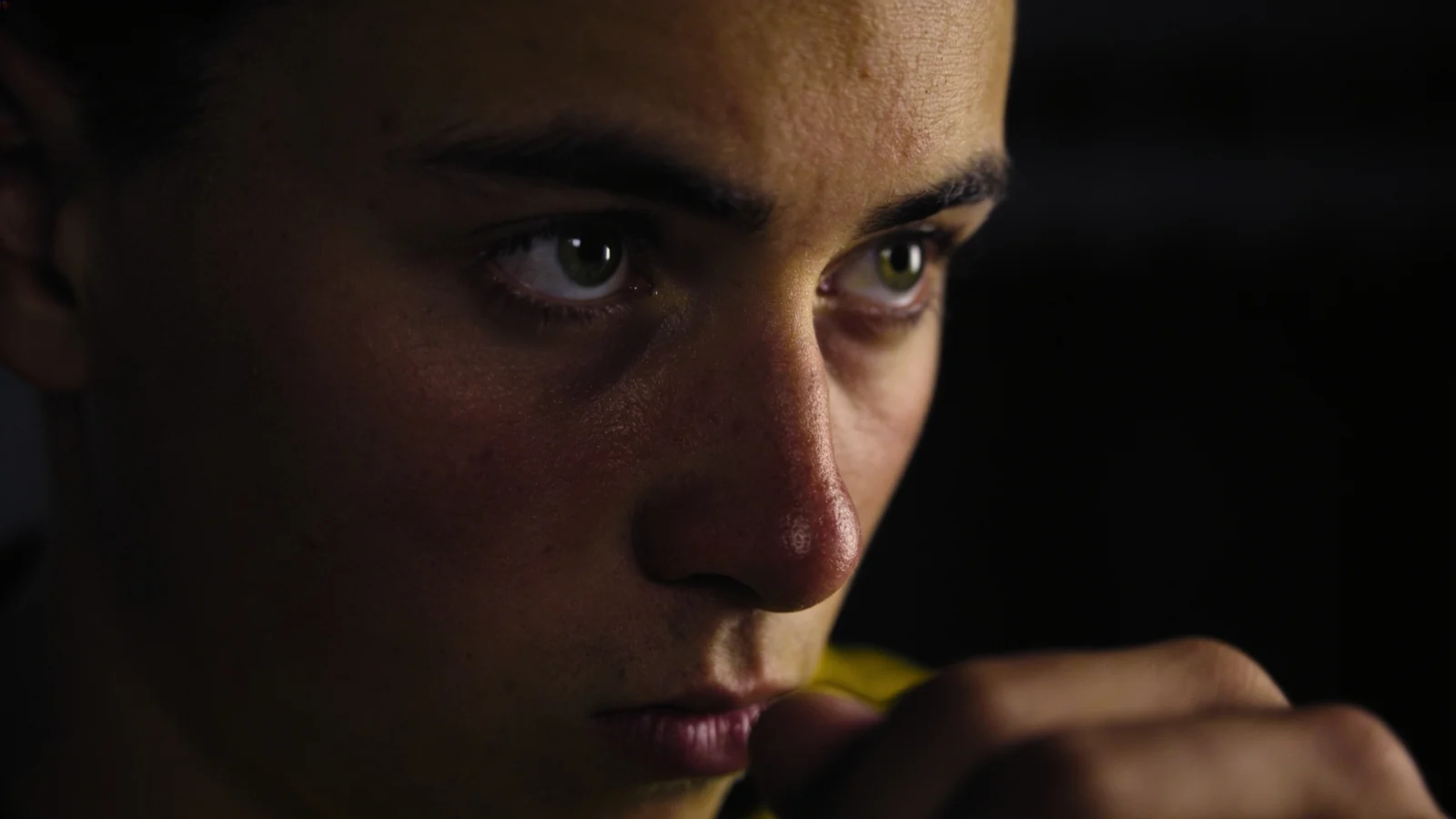
One common mistake is to think of a commercial only as promotional content. Advertising is also part of a company’s identity. Every decision communicates something: cinematography, light, casting, wardrobe, locations, editing, sound and colour. Together, they define how a brand is perceived.
An under-considered production can do more than struggle to deliver results; it can affect perceived value. If a company wants to position itself as premium while its advertising feels generic, undefined or inconsistent, a gap appears between what the brand says it is and what it communicates visually.
A commercial should therefore try to build a world, not merely show a product.
Advertising needs character
Many films can be technically competent and still leave no impression. They are correctly exposed, the edit works, the product appears and the message is understood. Yet nothing stays with the viewer after the film ends.
At TRIPLE Q, shooting correctly should be the starting point, not the final objective. The more interesting part begins when cinematography, direction, art, editing and colour start to construct something recognisable. A commercial can be dark, clean, aggressive, minimal, elegant, documentary-like or highly stylised. The point is not to apply the same aesthetic every time, but to find one that makes sense for the brand and execute it with intent.
What to review before hiring a company to make a commercial
The first consideration should be aesthetics. Before hiring a production company, look at its portfolio and ask a simple question: could this team build the visual world I want for my brand?
It is not necessary for the team to have already made exactly the same campaign. A versatile production company should adapt to different visual languages. But a portfolio reveals visual judgement, lighting control, composition, direction, colour, coherence between shots and overall quality.
The second consideration is its ability to solve problems. Audiovisual productions rarely happen exactly as planned: locations change, time becomes limited, daylight disappears sooner than expected, a shot becomes unworkable or an art element does not work. A good production company should not rely only on everything going according to plan; it should be able to maintain quality when the plan changes.
Schedules and delivery also matter, although within a well-organised team they should form part of the working method itself.
Full-service production or individual services
Not every brand arrives at a production company at the same point. Some have only an idea. Others already have an agency, director, script and visual treatment. Others have nearly the whole crew confirmed and only need a director of photography, colourist or a specific department.
A flexible audiovisual company should be able to work in both situations. It can take on a full production from concept to final delivery, or join an existing production. This is particularly useful for agencies, marketing departments and other production companies.
Perhaps a project already has a director and only needs cinematography. Perhaps the shoot is finished and needs colour grading. Perhaps several departments are already hired but the crew still needs completing. A full-service audiovisual production can adapt the structure to the real needs of the project without forcing it into one formula.

The advantage of a crew that already knows each other
There is another important difference between assembling people one by one and hiring a crew used to working together: methodology. When departments have collaborated before, they already understand how each other works. Communication is often faster, standards are more aligned and each department knows what it needs from the others to achieve the final result.
An exacting cinematography department asks lighting to maintain a certain standard. Art directly affects cinematography. Cinematography shapes colour. Editing shapes narrative. Every department is connected. When they share a method and level of care, the result is usually more coherent.
Shooting commercials in Galicia
Galicia offers a wide range of possibilities for commercial video production: urban settings, coastline, industrial spaces, architecture, nature and very different locations within relatively manageable distances. But a location alone does not make a commercial. The production still depends on the idea and the team responsible for executing it.
For that reason, when looking for a company to shoot commercials in Galicia, it can be more useful to assess the team’s creative and technical ability than simply choose the closest option. A Galicia-based production company can develop campaigns for local businesses, agencies, national brands and productions arriving from outside the region.
How TRIPLE Q works on commercial productions
TRIPLE Q works with an adaptable structure. Some projects only need a particular service: a production may arrive with the shoot already complete and need only colour grading; another may be looking for a director of photography; another may need to complete part of the crew.
Other projects arrive at an early stage. In those cases, TRIPLE Q can build a production crew around the project’s needs, bringing in departments and professionals used to working together. The advantage is not only having several services in one place, but sharing a methodology and a common visual standard. When cinematography, lighting, art, editing and colour work with the same level of care, each department helps raise the work of the others.
How much does it cost to shoot a commercial in Galicia?
There is no single price. Two thirty-second commercials can have completely different budgets. Cost depends on factors such as crew, shoot days, locations, casting, art, lighting, camera, lenses, grip, sound, post-production, colour grading and visual effects.
A project designed for a filmmaker with a light camera package will have a very different structure from a campaign with several departments. That is why the most useful approach is to build the budget after understanding what the film really needs. Reducing crew solely to lower the cost can make sense for some projects; in others, it can directly limit what is possible.
Frequently asked questions
What type of company do I need to shoot a commercial?
It depends on the scale of the project. A filmmaker can be enough for a small production, while a more ambitious campaign may need a production company able to bring together several departments.
Can a production company take care of the entire commercial?
Yes. Depending on the company, it can handle concept development, pre-production, direction, cinematography, shooting, editing, colour grading and delivery.
Can I hire only one part of the production?
Yes. Individual services such as cinematography, shooting, editing or colour grading can be hired when the rest of the project is already organised.
What should I look for in a production company’s portfolio?
Above all, its aesthetic, technical quality, visual consistency and ability to work across different kinds of projects.
Why does a commercial need several professionals?
Not every commercial does, but separating departments lets each professional focus on a specific part of the project and expands both technical and creative possibilities.
Choosing a company to shoot a commercial in Galicia
Not every production needs a large structure, and not every production should try to work with the smallest possible one. The decision should always start with the project. A filmmaker may be exactly what a small campaign needs; a more ambitious production may need direction, cinematography, lighting, art and other departments working together.
The important thing is that the structure does not limit the idea. When a brand looks for commercial production companies in Galicia, it should first consider whether the team can build the visual world it needs and then whether it can solve the problems that inevitably arise during a production. A commercial is not simply another piece of content: it is also part of the identity of the brand that releases it.